

Distributed, low-cost wireless drone charging
Sealed ground pads cost a fraction of a drone nest and can go wherever drones work, so drones top up nearby instead of flying home.
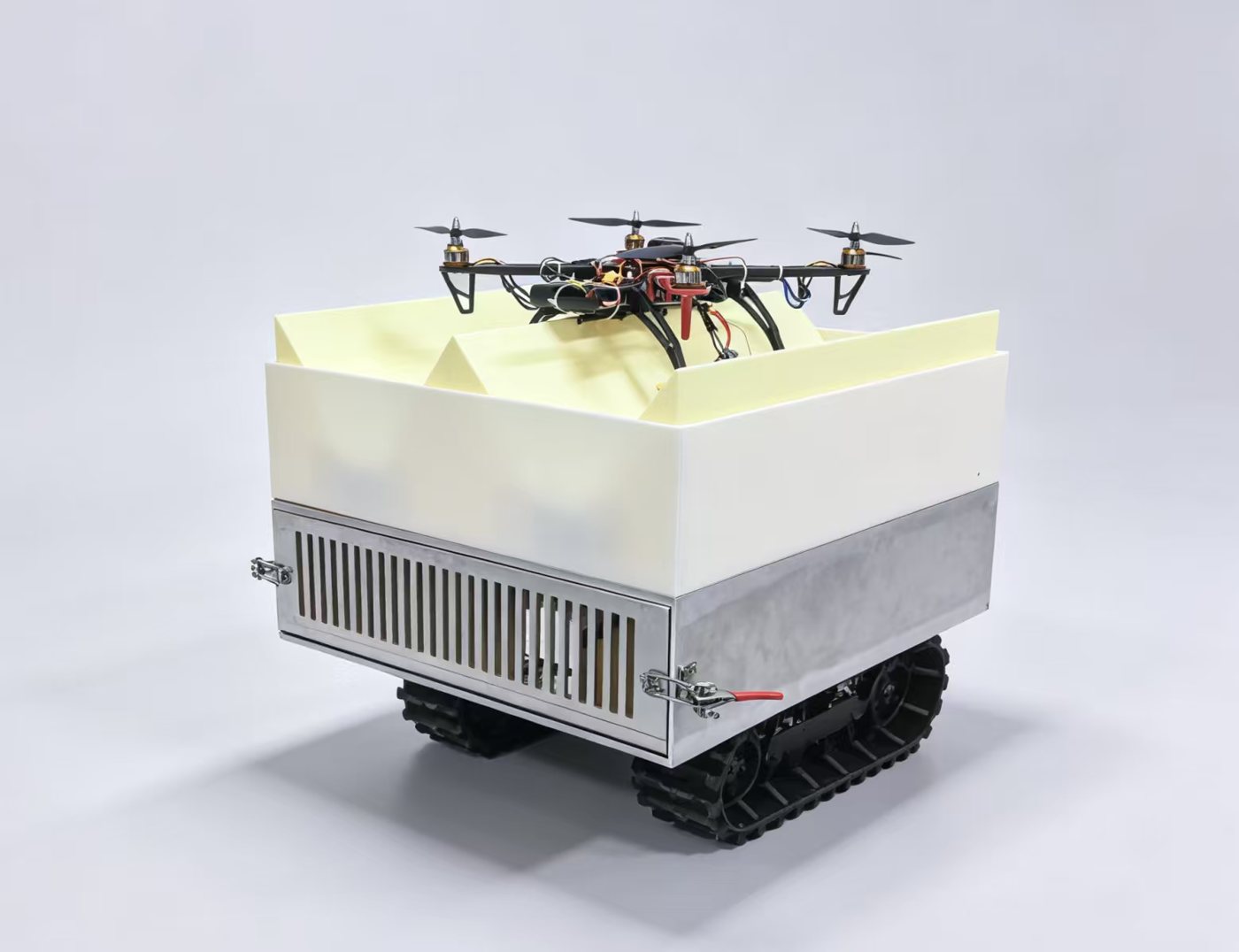
Works in sand, rain, cold and salt air
Sand and wind
Fully sealed, with no contacts to wear or jam.
Rain
IP-rated. Wireless power isn't affected by rain.
Cold
No plugs to freeze or oxidise.
Salt spray
No exposed metal, so no corrosion on coasts and offshore.
A network of small charging stations instead of one big nest
With a central nest, drones keep flying home to charge. The return trip can use more than 30% of the battery, which shrinks the working radius and means buying several large nests to cover a site.

- 1/5 to 1/10 the cost of a nestEach station is simple, with no hangar mechanism.
- Longer operating radiusFewer drones needed, longer working time, better use of people and drones.
- A network that growsAdd pads and drones as demand grows.
Wireless charging system
| Charging power | 300 W continuous |
| System efficiency | ≥85% DC to DC |
| Receiver weight | ≤300 g |
| Battery compatibility | Up to 48 V |
| Landing capture tolerance | ±200 mm |
| Protection | Pad IP67 · receiver IP54 |
| Operating temperature | −20 °C to +45 °C |
Every kit is customised to your aircraft and working conditions
Drones and sites differ, so we don't sell a one-size kit. We tailor the charging pad and receiver to your airframe and to where and how you operate: climate, dust, salt air, power supply and flight schedule.
Customised kit
Pad and receiver tailored to your drone and site: size, mounting, power level, battery voltage, connectors and sealing for your environment. We support installation and commissioning.
Full integration
Our engineers join your airframe design: custom receiver integration, EMC testing and volume delivery.
Joint development
Power levels, protocols and multi-drone charging schedules built for your aircraft and site, with shared results.
Running drones at a port, mine or farm?
We are looking for pilot sites and integration partners. Tell us about your aircraft and site.